About Dinesh Gulati
Research Overview
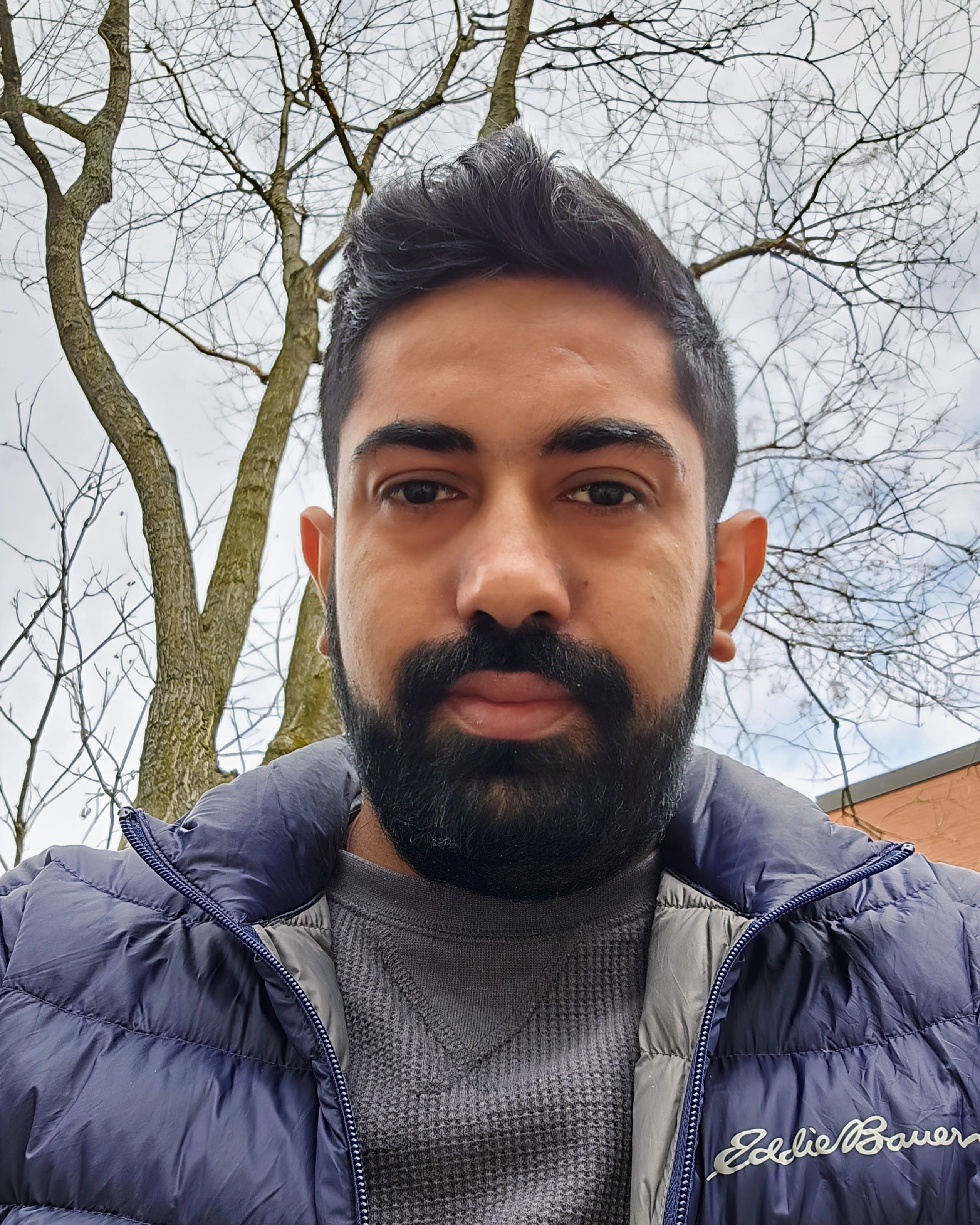
I am a Ph.D. student in Water Resources at the University of Idaho, working under the guidance of Dr. Meetpal S. Kukal. My research focuses on developing and deploying soil water budget models tailored for Idaho agroecosystems and their applications in climate-smart agriculture.
Current Research Focus
Soil Water Budgeting
Developing comprehensive FAO-56 based soil water balance models and contributing to the open-source pyfao56 package (recipient of the 2025 Irrigation Association's Vanguard Award).
Remote Sensing & GEE
Utilizing Google Earth Engine to analyze OpenET, gridMET, and soil data for the Eastern Snake Plain Aquifer, advancing our understanding of consumptive water use at multiple scales.
Climate-Smart Agriculture
Assessing the impacts of soil organic carbon enhancement and conservation practices on agrohydrological processes across diverse soil types, climates, and irrigation management strategies.
Software Development
Building interactive web applications for agricultural water management including FAO56-Studio and SnakeFlux cooperator portal for eddy covariance data delivery.
Academic Background
I hold a Master of Technology in Soil and Water Engineering from Punjab Agricultural University, India, where my research focused on simulating groundwater recharge from different rice cultivation systems using HYDRUS-1D. Prior to that, I earned my Bachelor of Technology in Agricultural Engineering from the same institution.
Recent Achievements
- Vanguard Award (2025) - Irrigation Association for pyfao56
- Joseph Jordan Student Research Fellowship (2025) - $3,500 from IWRRI
- Multiple Publications - Published in SoftwareX, Paddy and Water Environment, and Acta Alimentaria
Contact Information
+1 (814) 826-5770
900 W Royal Blvd., Idaho, USA
My Journey: From Fields to Algorithms
Water is life. But for those who depend on agriculture, it is also livelihood, sustenance, and survival. Growing up, I was always fascinated by the delicate balance between soil, water, and crops, and how even the smallest inefficiency in irrigation could impact an entire farming season. That curiosity led me on a journey that has shaped my career, taking me across fields, research labs, and now—into the realm of data-driven agriculture.
My first deep dive into water resource management began during my Bachelor’s in Agricultural Engineering at Punjab Agricultural University. While studying irrigation techniques and soil conservation, I worked on a project evaluating straw management technologies in paddy fields—an experience that first exposed me to the challenges of water loss and sustainability.
Wanting to better understand the science behind how soil stores and moves water, I pursued my Master’s in Soil and Water Engineering. Here, I designed and ran HYDRUS-1D simulations to estimate groundwater recharge in transplanted vs. direct-seeded rice fields, helping me see first-hand how modeling can complement real-world water management.
But research alone wasn’t enough. I wanted to develop real-world solutions. As a Senior Research Fellow, along with managing multiple field trials, I worked on developing IoT-based greenhouse waether monitoring sensors, building low-cost, on-field microcontrollers to track variation in micro-climate under different treatments. It was the first time I saw how technology could transform water conservation—a realization that set the stage for my next big leap.
Applying Science to Solve Real Problems
In 2023, I began my Ph.D. in Water Resources at the University of Idaho, in "Agrohydrology for Global Change Lab" where I now focus on irrigation and soil-water-plant interactions. My research blends hydrological modeling, machine learning, and remote sensing to better understand the soil water budgets and thus improve water productivity in agriculture.
Some of my recent work includes:
- Developing new functionalities for the
pyfao56Python package to model crop growth, evapotranspiration, and irrigation scheduling. - Using GIS-integrated crop modeling with OpenET and gridMET data to predict irrigation demands across different climates.
- Evaluating the impact of soil organic carbon (SOC) on soil water budgets to understand the impact of conservation practices for potential benefits.
By integrating remote sensing, IoT-based sensors, and machine learning, I aim to build a decision-support system for farmers and water managers—one that provides real-time, predictive insights into how to irrigate more efficiently while conserving water.
The Future of Smart Agriculture
My goal is simple: to make agriculture more water-efficient and resilient. As climate change reshapes water availability, we must build data-driven, adaptive irrigation systems that help farmers grow more crops with less water.
In my current research, I am working on a framework that integrates soil water simulations, OpenET remote sensing data, and field sensors. By analyzing real-time soil moisture, irrigation efficiency, and weather variability, we can improve predictions and decision-making in water-scarce agricultural regions.
I believe that the future of sustainable farming lies in bridging traditional agriculture with modern technology—a belief that fuels my work every day.
Research & Impact
3+ Publications
Peer-reviewed papers in water resources & hydrology
Multiple Presentations
ASA, CSSA, ASABE & NABEC Conferences
Ongoing Research
Soil Organic Carbon & Water Productivity
Scholarships & Awards
Whiting Water Scholarship, ISTE Best Thesis